
Mortgages for Properties with Large Acreage & Country Estates
When we talk about properties with large acreage in the UK, we typically mean homes with five or more acres of land, though many lenders consider ten acres and above as the threshold where standard lending criteria no longer apply. These properties fall outside the comfort zone of most high street lenders for a straightforward reason: the land component introduces complexities around valuation, use, and resale that mainstream banks prefer to avoid.
The good news is that securing a mortgage on a property with a large amount of land is absolutely achievable. Whether you’re looking at a country estate in the Cotswolds, a smallholding in Wales, an equestrian property in Hampshire, a rural home with extensive pasture in Devon, or rural land for development or investment, the finance exists.
What matters is understanding which lenders will consider your specific property profile and structuring the application correctly from the outset. With the right approach, properties that might seem unmortgageable to one lender can be straightforward propositions for another.
Fox Davidson is a specialist UK mortgage broker with extensive experience in financing properties with large acreage across England, Scotland and Wales. Our team routinely arranges mortgages for clients purchasing substantial rural holdings, including estates, farms, equestrian yards, rural land, and mixed-use properties that combine residential living with income-generating activities. We understand that every large acreage property is different, and we take the time to match each case to the most appropriate funding solution.
We also offer access to bespoke mortgage products, tailored financing options designed specifically for rural and large acreage properties. These bespoke products cater to unique property features, complex land uses, and larger land sizes, providing flexible lending solutions not typically available through standard mortgage offerings. These mortgages are often well served by private banks, as a specialist private bank mortgage broker we can access bespoke lending terms for clients.
📞 Call for immediate expert advice. 💻 Complete our enquiry form 📧 Email outline your requirements
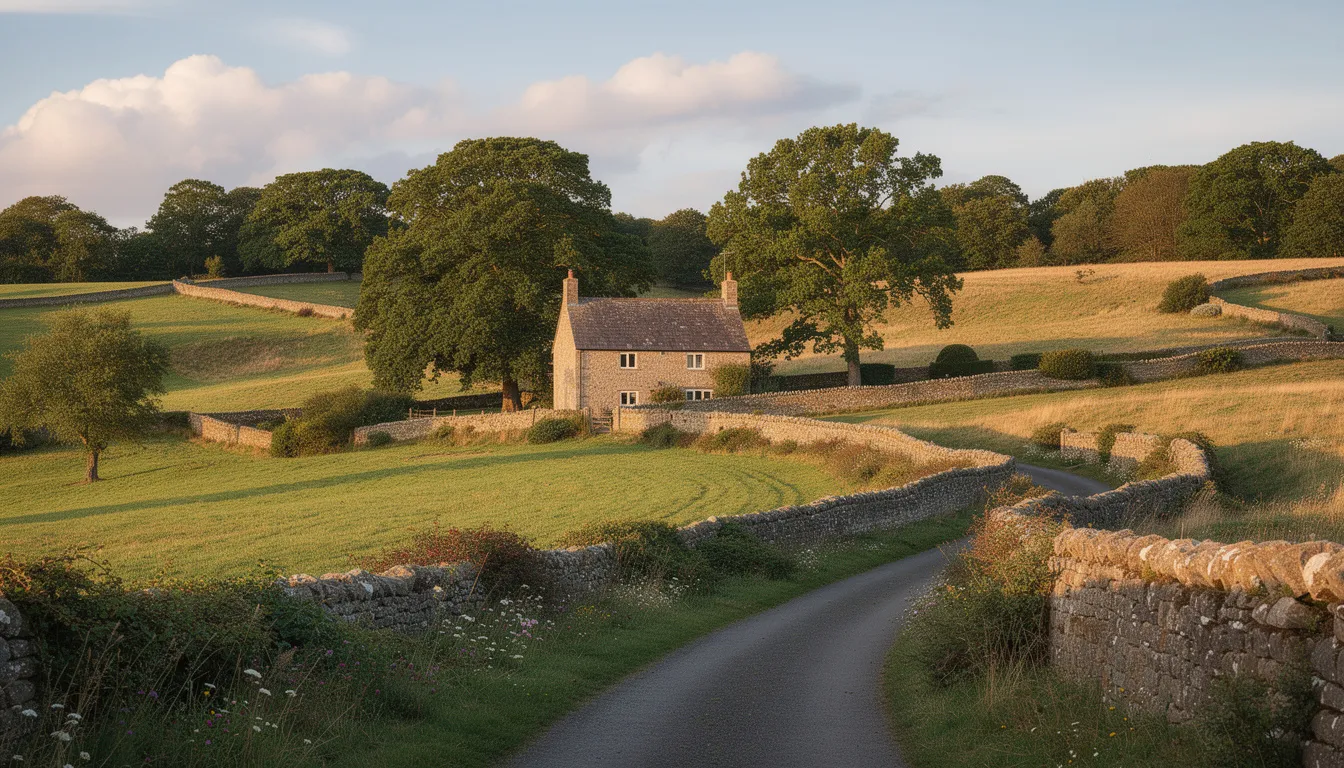
To give you a sense of the work we do, here are some recent client cases:
- Buyer acquiring a 20-acre smallholding in Devon with a farmhouse and traditional outbuildings
- Purchaser of a 50-acre Somerset country estate with woodland, pasture, and a secondary cottage
- Owner re-mortgaging a 15-acre property with 26 stables which were rented out on a DIY Livery basis.
In each case, the challenge was finding a lender comfortable with the acreage, the property type, and the intended use and in each case, we delivered.
Fox Davidson can source residential, semi-commercial, agricultural and specialist large acreage mortgages from a broad panel of lenders. This includes mainstream lenders who will stretch beyond their standard acreage limits for strong applications, private banks with flexible views on rural property, and niche lenders who specialise exclusively in farms, estates and equestrian holdings. Our role is to identify which route offers the best terms for your circumstances and to present your case in the strongest possible light.
What Are Large Acreage Mortgages?
A large acreage mortgage is simply a mortgage on a property where the land element is substantial—typically more than five acres, often ten to one hundred acres or more. These products finance country houses with extensive grounds, equestrian facilities, outbuildings and estates that may include multiple dwellings, woodland, lakes, or light commercial facilities.
Unlike a standard residential mortgage on a typical suburban home, large acreage mortgages must account for factors that most lenders rarely encounter. These include the use of the land, the presence of agricultural ties or planning restrictions, outbuildings such as stables, barns or workshops, and any commercial activity taking place on the property.
The valuation process is more complex, and the pool of willing lenders is smaller. Mortgage types and limits are also influenced by whether the property is used for residential purposes or for commercial or mixed uses.
When considering how much land they are willing to finance, most high street lenders are comfortable lending on properties with up to two or three acres of land for residential purposes, provided the land is clearly ancillary to the house, essentially a large garden or modest paddock. For a conventional mortgage, the maximum acreage is usually 10 acres. Many lenders will consider properties with up to 10 acres on a case-by-case basis, but only a few will consider properties with over 10 acres. Beyond ten acres, however, most cases migrate to specialist lenders or private banks with more flexible solutions for larger estates, as these lenders have more flexible acreage policies and greater experience in rural property valuation.
Typical reasons clients seek large acreage mortgages include purchasing a principal residence with twelve acres of pasture for keeping horses, refinancing a 30-acre smallholding to release capital for improvements or diversification, or raising finance against an inherited estate that the family wishes to retain rather than sell. In each scenario, the mortgage required differs based on the property’s characteristics and the borrower’s intended use. Note that in all cases primary use of the property and land is for main residence use.
Can You Get a Mortgage on a Property with Large Acreage?
Yes, you can get a mortgage on a property with large acreage. The key is understanding that your mortgage options narrow as acreage increases and as the property becomes more complex or commercially oriented. The right lender exists for almost every rural property, but finding them requires specialist knowledge.
Lender comfort zones typically break down as follows. Mainstream lenders are generally happy to lend on properties with up to approximately three to ten acres where the land is clearly ancillary to the house, functioning as garden, paddock, or amenity woodland. Properties with three to ten acres are assessed on a case by case basis, with approval depending on factors such as the property’s location, construction type, and the borrower’s financial strength. Once a property exceeds ten acres, most borrowers will need to approach specialist lenders or private banks with explicit appetite for rural and agricultural property.
It’s important to differentiate between property types when considering your options:
Purely residential estates include properties like a 15-acre country home used exclusively as a private dwelling, where the land functions as extended gardens, pasture for a handful of hobby animals, or simply provides privacy and amenity. These are the most straightforward to finance, and some mainstream lenders will consider them despite the acreage.
Lifestyle smallholdings occupy a middle ground, think of an eight-acre property with a farmhouse, a few sheep or goats, some chickens, and a couple of horses for family use. There may be modest income from selling eggs or hay, but the property is not a commercial operation. Many specialist lenders are comfortable with this profile.
For very large holdings exceeding 50 acres, lenders may separate the value between the residential core, the farmhouse and immediate curtilage and the surplus land. The mortgage may be capped at a percentage of the residential element only, with the land treated as additional security but not fully valued for lending purposes. This approach protects the lender’s position while still enabling the borrower to purchase.
Fox Davidson routinely brokers mortgages on properties with 10 to 50 acres of land. The process involves matching the property profile to the right lender appetite, presenting the case effectively, and managing the valuation process with surveyors experienced in rural property. With the right preparation, these applications proceed smoothly.
Key Lender Considerations for Properties with Large Acreage
Land Use
When you apply for a mortgage on a large acreage property, underwriters assess both you as a borrower and the property itself. Rural and large-land cases attract extra scrutiny because they present risks and complexities that standard residential properties do not. Understanding what lenders look for helps you prepare a stronger application.
Land use is perhaps the most significant factor. Lenders distinguish sharply between residential garden or amenity land, grazing land for hobby livestock, and commercial farming or diversification activities. A property with 15 acres of parkland surrounding a Georgian manor house presents differently from a 15-acre dairy farm or a property with established holiday lets, a farm shop, or glamping pods. Where the land generates income or supports commercial purposes, the lending moves away from standard residential products towards commercial and doe snot fall under our remit of advice.
Acreage and Lender Choice
Acreage directly impacts lender choice and maximum loan terms. At five acres, many lenders remain comfortable. At ten acres, the field narrows but options remain. At 25 acres, you are firmly in specialist territory. At 50 acres and beyond, the emphasis shifts to agricultural lenders, private banks, and institutions with explicit rural mandates. Loan-to-value ratios typically decrease as acreage increases, reflecting the greater uncertainty in valuing and reselling large land parcels.
Property Type and Construction
Property type and construction matter considerably in rural lending. Country properties frequently feature non-standard construction, from stone farmhouses with thick walls and slate roofs, listed buildings with restrictions on alteration, converted barns with steel frames, or log cabins to new build modular structures. Lenders vary widely in their appetite for unusual properties. What one underwriter declines, another may embrace. Fox Davidson’s role is to match unusual properties to lenders with proven appetite for that construction type and as a specialist private bank mortgage broker we can access bespoke terms for clients.
Outbuildings
Outbuildings on the same legal title require careful consideration. Stables, menages, barns, workshops, and holiday cottages all affect the lending decision. Some lenders are comfortable with extensive equestrian facilities provided they are for personal use. Others worry about the commercial potential of such infrastructure and may apply restrictions or decline altogether. Properties with multiple dwellings on a single legal title, such as a farmhouse with a separate cottage, may require different treatment depending on whether the secondary dwelling is occupied by family, let commercially, or used for staff accommodation.
Planning and Restrictions
Planning and restrictions represent a crucial area that many borrowers overlook. Agricultural ties and agricultural occupancy conditions limit who can occupy a property, typically restricting residence to those employed in agriculture or forestry. Section 106 agreements may impose affordable housing conditions or other planning obligations. Equestrian use classes determine what activities are permitted. Rights of way crossing the land, access rights, and overage or clawback provisions in favour of previous owners all affect marketability and therefore lender appetite. Agricultural restrictions and occupancy restrictions must be disclosed and assessed before any application proceeds.
Income and Affordability
Income and affordability assessment differs for large acreage properties. Where the borrower relies primarily on employed or self-employed income unrelated to the property, the assessment follows standard residential criteria. We can not factor in potential income generated form the land.
Fox Davidson pre-assesses all these factors before submitting applications. By packaging cases to address likely underwriter queries upfront, we reduce the risk of decline after valuation. A detailed understanding of the property’s planning status, construction and land use allows us to present each case in its strongest light.
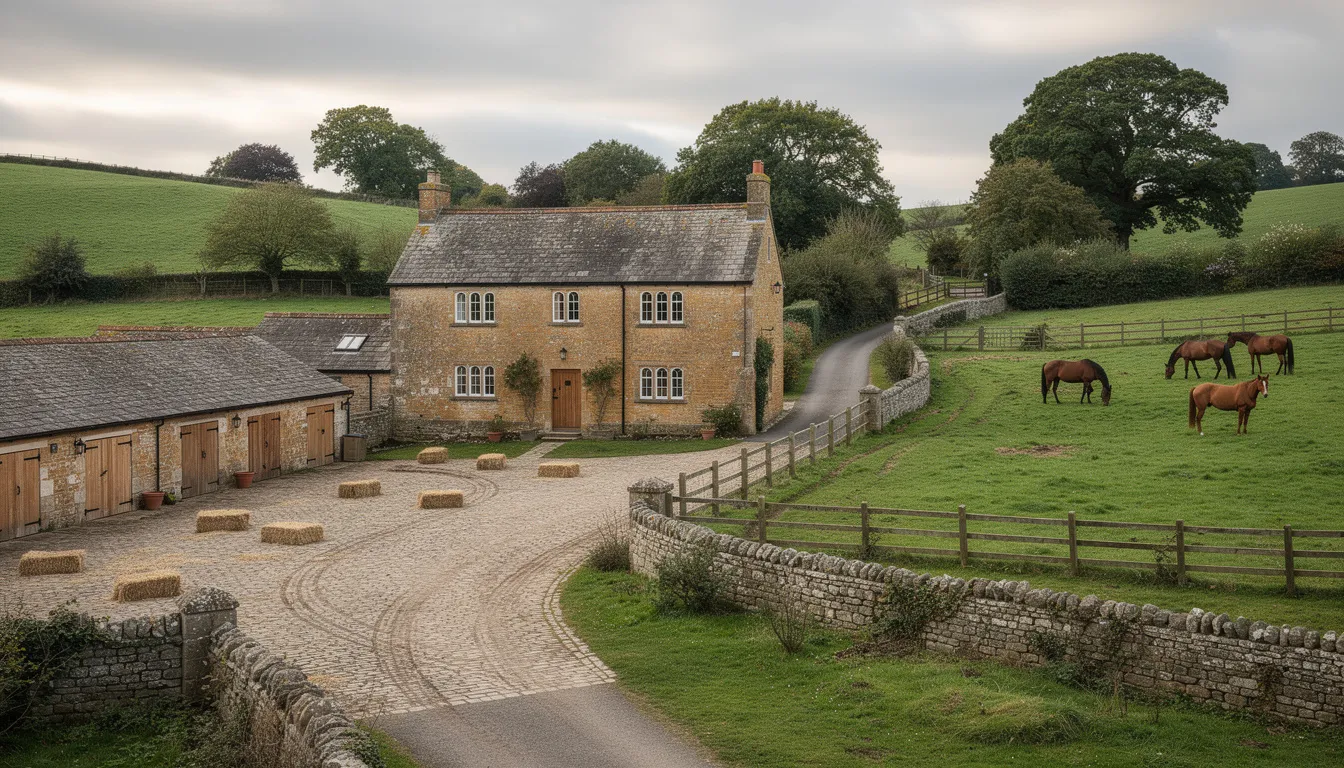
What Type of Mortgage Do You Need for a Large Acreage Property?
The primary factor determining the mortgage type is how the land is used: residential, commercial, or agricultural.
The correct mortgage type depends on how you use, or intend to use, the land and buildings, not simply on the number of acres. Choosing the wrong category can result in declined applications, unsuitable terms, or breaches of mortgage conditions that create problems later. Fox Davidson ensures clients are directed to the appropriate product from the outset. Bespoke mortgage products are also available for properties with unique features or complex land uses, providing tailored solutions beyond standard offerings.
Standard residential mortgages remain available for large acreage properties where the land is primarily for personal use. This includes gardens, hobby paddocks for a small number of horses or livestock kept for pleasure rather than profit, woodland managed for amenity, or simply open land that provides privacy.
Any income from the land must be incidental, selling a few bales of surplus hay, for example, rather than running a commercial equestrian facility. Some mortgage providers explicitly permit limited hobby farming on residential properties. The eligibility and type of mortgage available are strongly influenced by whether the property is used for residential purposes, commercial activities, or a mix of both.
Bridging finance serves as an interim option for large acreage properties that are currently unsuitable for standard mortgages. This includes unmortgageable farmhouses requiring extensive renovation, barns without residential planning consent, or estates with title issues that need regularisation.
Bridging loans provide short-term capital to acquire or hold the property while work is completed, with the exit strategy typically being refinance onto a long-term residential, agricultural, or commercial mortgage once the property meets lender requirements.
Deposits, Loan-to-Value & Affordability for Large Acreage Mortgages
Deposit Requirements
Deposit requirements and maximum loan-to-value ratios tend to decrease as properties become larger, more complex, or more commercially oriented. If you’re wondering how much deposit you’ll need for mortgages for properties with large acreage, the answer depends on the property’s size, use, and lender criteria. Understanding the typical ranges helps you plan your purchase or refinance effectively.
For standard residential properties with modest land of up to approximately five to ten acres, some lenders will offer up to 85–90% LTV, meaning a deposit of 10–15% of the purchase price.
This is subject to the borrower having strong income, a good credit profile, and a property that presents no unusual risks in terms of construction or location.
As acreage increases within this bracket, 80–85% LTV becomes more typical. The maximum LTV for residential properties with large acreage can be between 90% and 95%, but this is less common and usually reserved for borrowers with exceptional profiles.
Properties with larger acreage or modest mixed use, typically in the 10–30 acre range, generally attract LTVs of 70–80%. Lenders take a more cautious view where the land component represents a significant proportion of the overall value, even if that land is clearly ancillary to the residence.
A minimum property value may apply with certain specialist lenders, and the assessment will consider the marketability of the whole. Lenders often require a larger deposit for properties with significant acreage, especially if the land is used for commercial purposes.
Loan-to-Value Ratios
Loan-to-value ratios (LTVs) are a key consideration for both borrowers and lenders. As the acreage and complexity of a property increase, the maximum LTV typically decreases. For standard residential properties with modest acreage, LTVs can reach up to 90–95% in rare cases, but more commonly fall within the 80–85% range.
For properties with larger acreage or mixed use, LTVs are generally 70–80%. Commercial and agricultural properties often see LTVs of 60–75%, reflecting the increased risk and complexity.
Affordability Assessment
Affordability assessment differs markedly between residential and commercial lending. For residential mortgages, lenders calculate affordability using income multiples, typically up to 4.5 to 5 times income, though some lenders stretch to 5.5 or 6 times for borrowers with particularly strong profiles or for high earner mortgages. Where the borrower’s income is straightforward employed income, this calculation is relatively simple.
Interest-Only Options
Large Interest-only mortgage structures are available on large estates and rural properties, particularly through private banks serving high-net-worth clients. Where a borrower has substantial assets outside the property or multiple income streams, lenders may agree to interest-only terms for part or all of the mortgage. Monthly payments are lower, but the capital must be repaid at term end, usually through sale, refinance, or other investments maturing. These arrangements suit borrowers with sophisticated financial planning needs.
📞 Call for immediate expert advice. 💻 Complete our enquiry form 📧 Email outline your requirements
How Fox Davidson Helps Secure Mortgages for Properties with Large Acreage
Initial Discovery
Fox Davidson is a specialist mortgage broker with deep expertise in complex, rural, and large acreage lending across England and Wales. From our offices, we serve clients nationwide, whether you are purchasing a 25-acre Cotswold smallholding, refinancing a 40-acre Welsh hill farm, or acquiring a 100-acre estate with woodland, lakes, and multiple cottages.
Our process begins with initial discovery: understanding exactly what you are trying to achieve and the nature of the property involved. Every large acreage property is different. A Georgian manor house with parkland and a stable block presents differently from a working livestock farm or a converted barn with 20 acres of wildflower meadow. We take time to understand the full picture before recommending any lending route.
Property and Land Analysis
Property and land analysis follows. We review title plans to understand precisely what is included, assess the current and intended land use, identify any agricultural ties or other restrictions, examine rights of way and access arrangements, and understand the mix of residential versus commercial elements. This groundwork is essential because it determines which lenders will consider the property and on what terms.

Lender Selection
Lender selection is where our specialist knowledge delivers value. We maintain relationships with mainstream lenders who will stretch beyond published acreage limits for the right case, specialist rural banks with explicit mandates for farming and equestrian use lending, private banks with flexible attitudes toward unusual properties and high-net-worth clients, and niche lenders who finance properties that other lenders won’t touch. Fox Davidson can also access bespoke mortgage products designed for unique rural and large acreage property needs, ensuring tailored solutions for complex land uses or larger land sizes. Matching your case to the right lender rather than submitting speculatively to whoever happens to be on a generic panel increases approval rates and secures better terms.
Application Structuring
Structuring and presentation of the application is critical for large acreage cases. We prepare robust applications with detailed notes for underwriters, addressing questions about usage, income, and marketability before they are raised. Packaging the case properly reduces the back-and-forth that delays standard applications and decreases the risk of late-stage declines.
End-to-End Support
End-to-end support continues through to completion. We liaise with valuers familiar with rural properties to ensure the survey addresses the unique characteristics of the holding. We coordinate with solicitors handling the conveyancing process, particularly where title matters or agricultural occupancy conditions need clarification. And we manage lender conditions through to drawdown, keeping the transaction on track.
Bridging Finance Solutions
Fox Davidson also advises on bridging finance for properties currently unsuitable for term lending. Non-habitable farmhouses requiring renovation, barns without residential consent, or estates needing significant works can be acquired with short-term bridging facilities and then refinanced onto appropriate long-term products once the property is mortgageable. This approach opens opportunities that would otherwise be inaccessible.
Next Steps: Arranging Finance for Your Large Acreage Property
If you are considering buying, refinancing, or developing a property with significant acreage, Fox Davidson can help you navigate the process and secure appropriate finance. Here is how to proceed.
Contact our team directly by telephone during UK office hours for an initial conversation about your requirements. Alternatively, email us with an outline of the property and your objectives, and one of our expert mortgage advisers will respond promptly.
To make the most of your initial consultation it is always useful to send us a link to the property for sale, so that we can analyse the property for you.
Initial consultations are without obligation. We will quickly assess your situation and indicate whether mainstream, specialist or bridging routes are likely to be appropriate. If the case falls within our expertise and large acreage lending very much does, we will explain the likely terms, timescales, and next steps clearly.
The mortgage application process for large acreage properties can feel daunting, but with specialist guidance, it becomes manageable. Our role is to remove complexity, identify the right mortgage for your circumstances, and secure competitive rates from lenders who understand rural property.
Whether you’re purchasing a 10-acre family home or refinancing a 30-acre smallholding to release capital, Fox Davidson can structure and secure the right finance. Contact us today to discuss your large acreage property.
📞 Call for immediate expert advice. 💻 Complete our enquiry form 📧 Email outline your requirements
FAQ’s: Mortgages for Properties with Large Acreage
Is there a maximum number of acres I can have on a residential mortgage?
There is no universal maximum acreage for residential mortgages, but practical limits apply. Many mainstream banks are comfortable up to approximately 10 acres where the land is clearly ancillary to the house. Some specialist lenders and private banks have no formal acreage restrictions and will consider properties with 50, 100, or even more acres of land on a case by case basis. The key factor is how the land is used rather than the raw number of acres.
Can I get a mortgage on a house with fields, woodland, or a small lake?
Yes, these features are often acceptable to lenders provided the property is primarily residential and safely accessible. Fields used for hobby grazing, amenity woodland, and ornamental lakes are typically viewed as extensions of the residential curtilage. Lenders may require the valuation to comment on any management obligations or safety considerations, but such features do not automatically preclude mortgage lending.
Do I need a commercial or agricultural mortgage for a smallholding?
This depends on the proportion of income and commercial activity. A smallholding used primarily as a residence with a few livestock for personal consumption may qualify for a residential mortgage from a flexible lender. Once the property generates income that represents a significant proportion of your total income, or if there is an agricultural tie affecting the property, an agricultural mortgage or semi-commercial facility becomes more appropriate. Fox Davidson only secure mortgages on property that will be used as a main residence and the mainly for personal usage.
What deposit do I need for a large acreage mortgage?
Deposit requirements vary by property type and use. For standard residential properties with modest acreage, 10–20% deposits are often achievable. Larger or more complex properties typically require 20–30%. Commercial or agricultural properties with business operations may require 25–40% deposits. The stronger your income and credit profile, the more flexibility lenders show on deposit requirements.
Will the lender accept stables, arenas, or barns on the same title?
Many lenders will accept equestrian facilities and outbuildings on the same single legal title as the main residence. Treatment varies by lender and by use. Stables for personal horses are generally straightforward. Commercial equestrian operations, such as livery yards or training centres, attract more scrutiny. We advise on which lenders are most comfortable with specific outbuilding configurations.
Can I remortgage an existing property if I have added more land?
Yes, though the increased acreage and any changes in use may affect your lender options. If you purchased a property with five acres and subsequently acquired an adjacent parcel bringing the total to 25 acres, your current lender may not be comfortable extending finance against the whole. A remortgage through a specialist rural lender or private bank may offer better terms. The valuation will need to address the combined holding, and any change in use such as introducing grazing livestock or diversified enterprises must be declared.
Can overseas or expat buyers get mortgages on UK properties with large acreage?
Specialist and private banks do offer mortgages for expats and overseas buyers acquiring UK rural property, though additional eligibility criteria apply. Lenders will want to understand the source of funds, verify income in the relevant currency, and may require larger deposits, typically 25–35% minimum. Currency considerations and tax implications should be discussed with appropriate advisers. Fox Davidson works with international clients seeking UK country estates and farms.
Can I use bridging finance to buy before my current home sells?
Absolutely. Regulated bridging finance enables you to buy before your current home sells. This is particularly valuable for country estate purchases where the right property appears suddenly and may attract competing interest. Bridging terms typically run from three to 12 months, with the loan repaid when your sale completes and a conventional residential mortgage replaces the bridge if required.
What happens if my property has an agricultural tie or occupancy restriction?
Properties with agricultural ties require lenders with explicit appetite for such restrictions. The mortgage offer will acknowledge the restriction, and the lender will want comfort that you qualify to occupy under its terms. Removing agricultural restrictions through planning applications is possible in some cases but takes time and is not guaranteed. Fox Davidson can advise on lenders who accept agricultural properties and on the implications of occupancy restrictions for your mortgage application.
Are mortgage rates higher for large acreage properties?
Mortgage rates for large acreage properties vary depending on the lender and product type. Residential mortgages on modest acreage from mainstream lenders may carry competitive high street rates. Specialist and private bank lending typically carries a premium of 0.25% to 1.0% above standard rates, reflecting the additional complexity and reduced lender competition. Agricultural and commercial facilities are priced according to business lending criteria and may be higher again. Fox Davidson ensures you access the most competitive rates available for your specific property profile.
How long does the mortgage application process take for large acreage properties?
The mortgage application process for properties with land typically takes longer than standard residential purchases, often eight to 12 weeks from application to offer. The extended timeline reflects the need for specialist valuations by surveyors experienced in rural property, additional underwriting checks on land use and income, and potentially more complex legal work during the conveyancing process. Early engagement with a specialist mortgage advisor shortens delays by ensuring applications are correctly structured from the outset.
Large Acreage & country estate brokers
Since 2005 our brokers have been advising clients across the UK on country estate funding and arranging mortgages on property with large acreage from Suffolk to Yorkshire.
📞 Call for immediate expert advice. 💻 Complete our enquiry form 📧 Email outline your requirements